
No one wants to see their rent go up, let alone because of an influx of airplanes. Yet, this is what has been happening for years now. A new study by the New Economics Foundation, commissioned by T&E, finds that tourist growth driven by aviation is fueling a severe housing crisis across Europe.
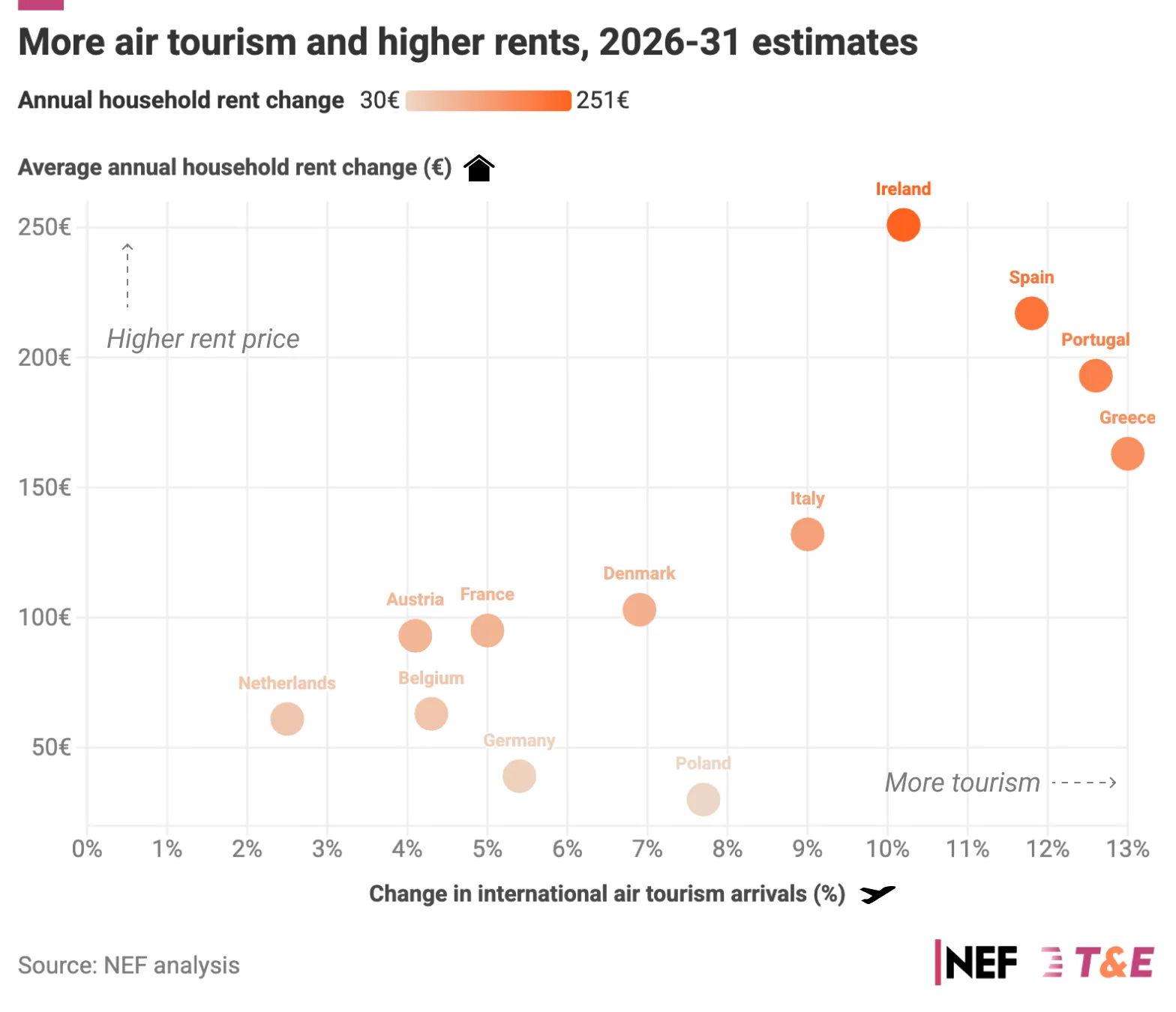
The most affected countries are Spain, Portugal, Italy, Greece and Ireland, where average annual rents are projected to rise by up to €250 per year over the next five years. Incomes are failing to keep pace with these surging rental markets, leading to lower-income households ultimately paying the steepest price for tourism growth.
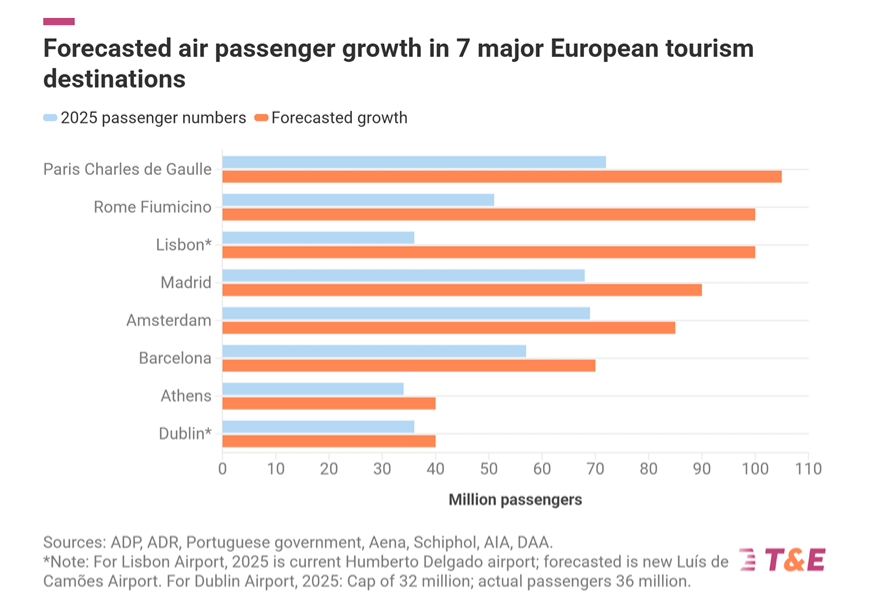
And despite the growing backlash to overtourism from these local communities, governments still plan to keep expanding airports to bring in even more visitors. For example, Spain has committed €12.9 billion toward airport investment, including the expansion of the Barcelona and Madrid airports. Athens is currently rolling out a €1.3 billion expansion to boost annual passenger capacity by 25%, while terminal expansions are actively underway in Lisbon.
The problem is that most economic assessments in the aviation sector completely ignore the dark side of growth. They fail to account for how the growth of air tourism drives up rent and fuels the housing crisis, among other major local issues.
If you work in the tourism sector, this growth doesn’t always translate into better wages, actually it leaves you to see some of the worst pay while living costs and rents shoot up. In accommodation, a big share of the tourism spending goes to large hotel chains, not local businesses. And to make matters worse, investors are putting money into real estate instead of funding innovative industries like tech, or electric vehicles and trains that are crucial to switch to clean energy.
This raises a fundamental question about how we choose to vacation: Is it really necessary to hop on a plane to visit European destinations that are already suffocating under the weight of overtourism?
Many of Europe’s most polluting short-haul routes actually have rail alternatives under eight hours. For instance, a trip from Paris to Barcelona takes less than seven hours and Milan to Paris can be done in roughly the same time. Choosing rail over aviation does more than just drastically reduce emissions, it also opens up access to lesser-known destinations along the way. By traveling by land, we can naturally spread out tourism and relieve the pressure on saturated urban centers.
Indeed, there is much more concentration of tourist nights among the top three regions visited by foreign visitors (the majority travelling by air) than by domestic residents (the majority travelling by land). For example, in Austria, foreign visitors concentrate 74% of their nights in the top three most visited regions, while domestic travellers spend just 48% of theirs.
The path forward in reducing emissions and innovating purposeful travel involves targeted actions: reducing premium, long-haul and frequent flying, while maximising rail journeys by choosing closer destinations. Therefore, rethinking travel to prioritise quality over quantity, sustainable connectivity and productivity, is key to pave the way for the mobility of the future.
Aiza Rodrigues Akhtar, Aviation Campaign Officer